Tools for understanding yourself
Whether or not we ever work together, you deserve good information and a few honest check-ins. Here are trusted reads, a feelings wheel, and confidential self-screeners you can use any time.
Trusted articles
A short, curated shelf — from established, reputable sources — on the themes that bring many people to therapy.
Links open in a new tab on the publisher’s website.
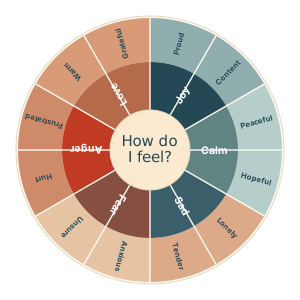
The feelings wheel
“I feel bad” is a start — but naming the feeling more precisely is where insight begins.
A feelings wheel helps you move from broad emotions at the center toward the specific feeling underneath. It’s a simple, powerful tool for self-awareness, journaling, and conversations — including the ones we’ll have in session.
Feelings wheel hosted by Calm.
Quiet check-ins you can do privately
These brief, widely used questionnaires can help you put words to what you’ve been feeling. They’re a starting point for reflection — and for our first conversation.
PHQ-9
Patient Health Questionnaire — a common screen for depressive symptoms over the past two weeks.
Open PHQ-9 (PDF)GAD-7
Generalized Anxiety Disorder scale — a quick measure of anxiety symptoms and their intensity.
Open GAD-7 (PDF)PCL-5
PTSD Checklist for DSM-5 — a self-report screen for symptoms following a traumatic experience.
Open PCL-5 (PDF)Talk it through with someone who gets it
If anything here resonated, that’s worth paying attention to. Take the readiness survey and Hamilton will follow up personally.